
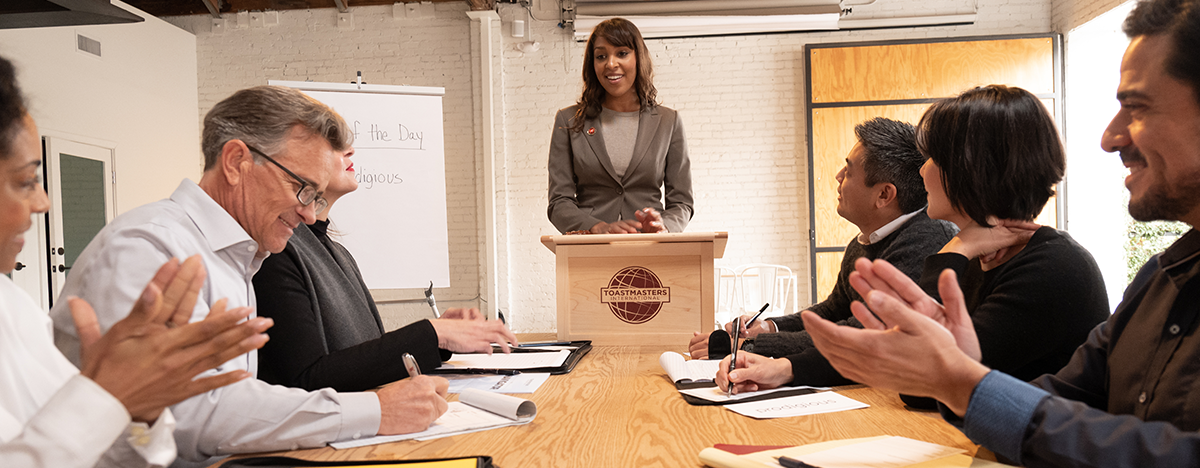
Club Meeting Roles — At a Glance
In every Toastmasters club meeting, members take on specific roles that help the meeting run smoothly and provide valuable learning opportunities. Serving in meeting roles builds confidence, improves communication and leadership skills, and makes each meeting engaging and productive for everyone involved.
Functionary Roles
Below are the key roles you’ll see in a typical club meeting:
Ah-Counter
Points out common filler words (like “um” and “ah”) to help speakers become more polished.
Grammarian
Introduces the “Word of the Day,” listens for creative language use, and offers feedback.
Timer
Tracks how long each speaker speaks and helps keep the meeting on schedule.
General Evaluator
Observes the whole meeting and provides feedback on how well everyone performed their role.
Speaking Roles
Speakers
Deliver prepared speeches and practice public speaking in a supportive setting.
Evaluator
Gives constructive feedback to a prepared speaker, helping them grow.
Table Topics® Participants
Respond to impromptu prompts to sharpen thinking and speaking “on the spot.”
Leadership Role
Toastmaster of the Day
Serves as the host of the meeting, guiding the agenda, introducing speakers, and ensuring the flow of the meeting.
Each of these roles plays an important part in helping club members develop real-world communication and leadership skills while ensuring every meeting is structured, engaging, and fun.
👉 For full official descriptions of all Toastmasters club meeting roles, visit the Toastmasters International page:
https://www.toastmasters.org/Membership/Club-Meeting-Roles